The Complete Guide To Sleep Apnea Diagnosis: From Testing To Treatment
Sleep apnea is a condition that affects breathing during sleep. Many people do not realize they have it. They may think loud snoring or feeling tired during the day is just part of getting older. In reality, these can be signs of a sleep disorder that needs medical attention.
Getting tested for sleep apnea is the first step toward better sleep and better health. The process may sound complicated, but it is usually simple and straightforward. It starts with talking to your doctor, followed by a sleep test, and then reviewing the results to decide on treatment if needed.
This guide explains each step in clear, easy terms, from recognizing symptoms to starting treatment, so you know what to expect and can feel confident moving forward.
Why Sleep Apnea Diagnosis Matters
Sleep apnea is not just about snoring. It is a medical condition that can affect the heart, brain, and overall health.
The Risks Of Delaying Testing.
When sleep apnea goes untreated, breathing interruptions continue night after night. Over time, this may increase the risk of high blood pressure, heart disease, stroke, and type 2 diabetes.
Delaying testing also prolongs fatigue, poor concentration, and disrupted sleep.
Why Symptoms Are Often Overlooked.
Many people assume loud snoring is normal. Others may not realize they stop breathing during sleep unless a bed partner notices.
Daytime fatigue is often blamed on stress or aging rather than a sleep disorder.
The Connection Between Diagnosis And Long-Term Health.
A proper diagnosis allows treatment to begin. Treatment improves oxygen levels, reduces nighttime strain on the body, and supports healthier sleep patterns.
Diagnosis is the first step toward protecting long-term health.
When To Take Symptoms Seriously.
You should consider evaluation if you experience loud snoring, choking or gasping at night, morning headaches, or ongoing daytime sleepiness.
If symptoms affect daily life, testing is appropriate.
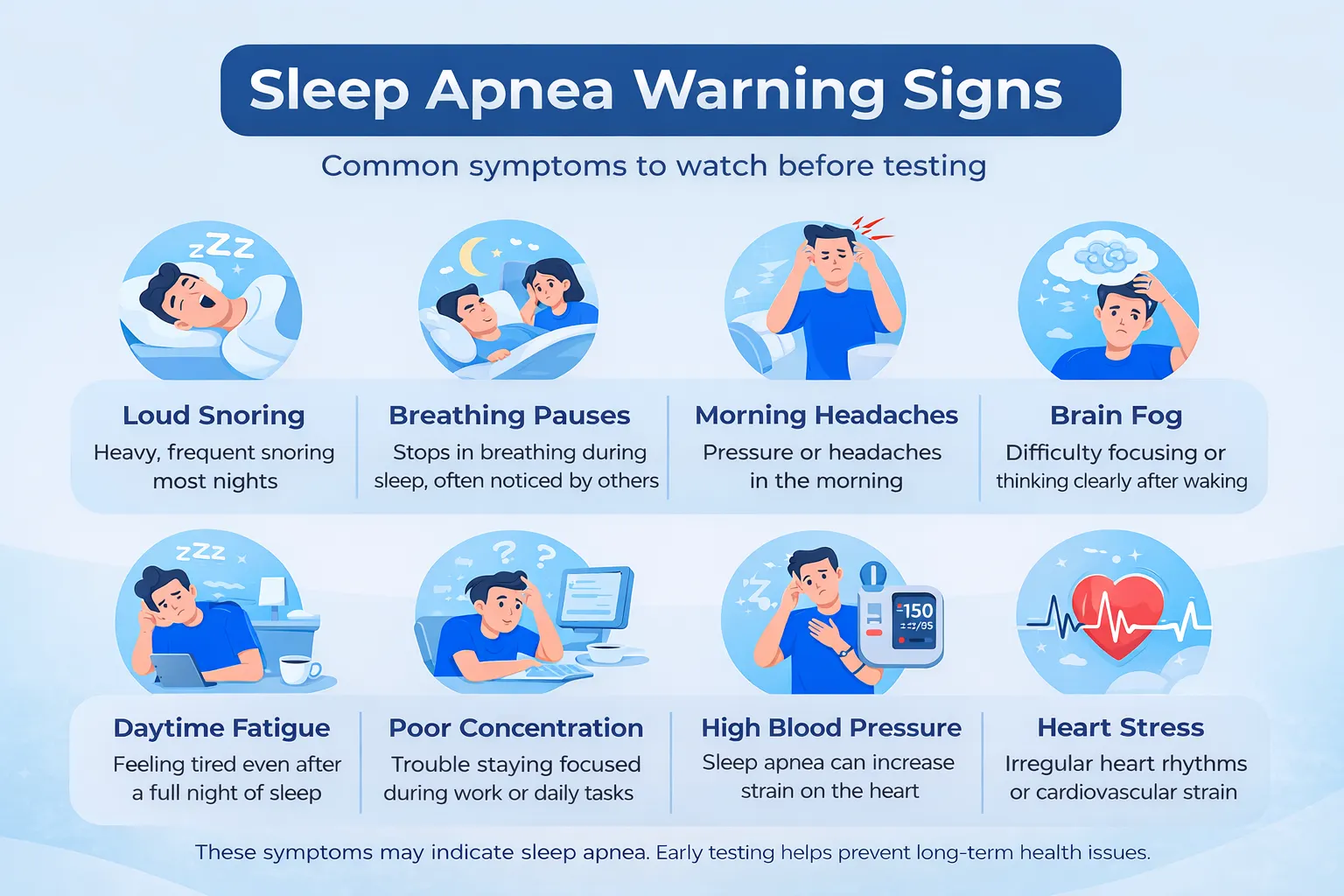
Recognizing The Signs Before Testing
Loud Snoring And Breathing Pauses
Snoring that is loud and consistent, especially when combined with observed breathing pauses, it is a key warning sign.
Morning Headaches And Brain Fog
Low oxygen levels overnight may lead to headaches and difficulty concentrating in the morning.
Daytime Fatigue And Poor Focus
Excessive daytime sleepiness is one of the most reported symptoms. Patients may feel tired even after what seems like a full night of sleep.
High Blood Pressure And Heart Strain
Sleep apnea places stress on the cardiovascular system. It is frequently associated with high blood pressure and heart rhythm disturbances.
Who Is At Higher Risk
Higher risk groups include:
- Adults over age 40.
- Individuals who are overweight.
- Those with a family history of sleep apnea.
- Patients with high blood pressure.
- Men, although women are also affected.
Step 1 – Talking To Your Physician
The diagnosis process begins with a medical evaluation.
What To Discuss At Your Appointment
You’ll have to describe:
- Snoring patterns
- Daytime fatigue
- Morning headaches
- Witnessed breathing pauses
Medical history Clear communication helps your physician assess risk accurately.
How Doctors Evaluate Sleep Apnea Risk
Physicians evaluate symptoms, medical history, physical exam findings, and risk factors.
STOP-BANG Screening Overview
STOP-BANG is a short checklist doctors use to see if someone may be at risk for sleep apnea. It is not a test by itself. It is simply a quick way to decide if further sleep testing is needed.
- Snoring
- Tiredness
- Observed apnea
- Blood pressure
- Body mass index
- Age
- Neck circumference
- Gender
When A Referral Is Given
If screening suggests possible sleep apnea, your physician will order a sleep study, either at home or in a lab.
Step 2 – Understanding Sleep Apnea Testing Options
There are two primary diagnostic pathways.
Home Sleep Testing Explained
Home sleep tests allow patients to sleep in their own bed while wearing portable monitoring equipment.
These tests measure breathing patterns, oxygen levels, and airflow.
In-Lab Sleep Study Explained
An in-lab study (polysomnography) is performed overnight in a sleep center. It monitors brain activity, breathing, oxygen levels, heart rhythm, and muscle activity.
Accuracy And Limitations
Home testing is appropriate for many patients with moderate to high risk and uncomplicated medical histories.
Lab studies are recommended when more detailed monitoring is required.
Which Patients Qualify For Each
Physicians determine the appropriate test based on symptoms, risk level, and overall health.
What Happens During A Home Sleep Test
Home testing is straightforward and designed for comfort.
How Equipment Is Set Up
Patients receive instructions on placing small sensors on the chest, finger, and nasal area.
What To Expect Overnight
You sleep in your own bed. The device records breathing patterns and oxygen levels.
Common Concerns
Some patients worry about sleeping with equipment. Most adjust quickly, and the devices are lightweight.
How Results Are Reviewed
After the test, data is analyzed by a sleep specialist. Results are sent to your physician for review.
Need help getting your CPAP setup right?
What Happens During A Lab Sleep Study
Lab studies provide comprehensive monitoring.
Monitoring And Observation
Technicians monitor data remotely throughout the night.
Sensors And Equipment Explained
Sensors are placed on the scalp, chest, legs, and finger. These measure brain waves, breathing, oxygen levels, and movement.
When Lab Testing Is Recommended
Lab testing may be advised for:
- Complex medical histories
- Suspected central sleep apnea
- Inconclusive home tests
Addressing Patient Fears
Sleep centers are private and comfortable. Staff are trained to support patient concerns.
Understanding Your Sleep Study Results
After testing, you will receive a report.
What AHI Means
AHI (Apnea-Hypopnea Index) measures the number of breathing interruptions per hour.
Mild, Moderate, And Severe Sleep Apnea
- Mild: 5–14 events per hour
- Moderate: 15–29 events per hour
Oxygen Levels Explained
Reports include oxygen saturation levels and how often they drop during sleep.
What Your Report Will Include
The report typically summarizes:
- AHI score
- Oxygen data
- Snoring levels
- Sleep positioning effects
What Happens After A Sleep Apnea Diagnosis
Diagnosis leads to a treatment plan.
Reviewing Treatment Options
Your physician will discuss appropriate therapies based on severity and overall health.
CPAP As First-Line Therapy
Continuous Positive Airway Pressure (CPAP) is the most common and clinically supported treatment for obstructive sleep apnea.
Oral Appliances And Alternatives
For some patients, oral appliances or positional therapy may be considered.
When Additional Evaluation Is Needed
Complex cases may require further cardiac or pulmonary evaluation.
Starting CPAP Therapy After Diagnosis
If CPAP is prescribed, several steps follow.
Prescription Process
A formal prescription is required for CPAP equipment.
Insurance Authorization
Insurance providers often require documentation before approving equipment.
Machine And Mask Selection
Proper mask fitting and machine selection are essential for comfort and effectiveness.
Setting Realistic Expectations
Adjustment may take several nights. Ongoing support improves long-term use.
Insurance And Coverage For Sleep Apnea Treatment
Understanding coverage helps avoid delays.
Does Insurance Cover Testing?
Most insurance plans cover medically necessary sleep testing.
Medicare Requirements
Medicare requires documented diagnosis and compliance monitoring during the initial therapy period.
Authorization Timelines
Approval timelines vary by plan and documentation completeness.
Understanding Rental vs Purchase
Many insurers classify CPAP devices as capped rentals before ownership transfers.
Common Delays In Diagnosis And How To Avoid Them
After testing, you will receive a report.
Slow Prescription Transfers
Delays may occur when prescriptions are not transmitted promptly.
Insurance Authorization Delays
Incomplete paperwork can extend approval timelines.
Lack Of Follow-Up
Failure to schedule follow-up appointments can slow progress.
Poor Communication From DMEs
Clear communication between patients, physicians, and equipment providers helps prevent unnecessary delays.
Frequently Asked Questions About Sleep Apnea Diagnosis
How Long Does Diagnosis Take?
The timeline varies. Once testing is completed, results are typically reviewed within several days.
Can I Choose Home Testing?
In many cases, yes. Your physician determines eligibility.
Is Sleep Apnea Permanent?
Obstructive sleep apnea is often a chronic condition. Management is typically ongoing.
Do I Need CPAP for Life?
Many patients use CPAP long-term. Treatment needs may change based on weight, health, or other factors.
What If I Cannot Tolerate CPAP?
Mask adjustments, pressure changes, and follow-up support often resolve comfort issues. Alternative treatments may also be discussed.