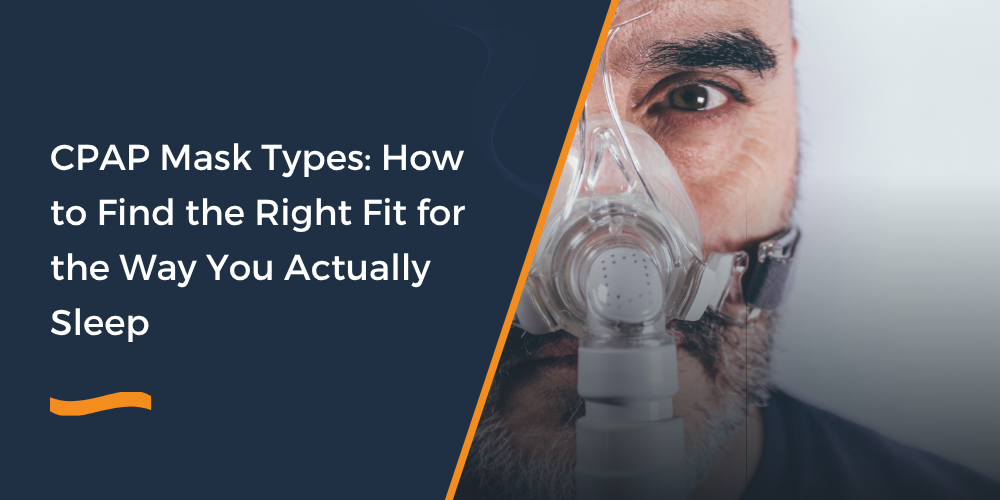
If you have ever given up on CPAP therapy, or come close to it, there is a good chance the mask had something to do with it. Research consistently points to mask discomfort as the number-one reason people stop using their CPAP, and yet most patients are handed a mask at setup without much explanation of why it was chosen or whether another type might suit them better.
The truth is that not all CPAP masks work the same way, and the right one for you depends on things your device settings alone cannot determine, how you breathe at night, how you sleep, whether you feel claustrophobic, and even whether you have a beard or wear reading glasses in bed. Getting this decision right is not a minor detail.
It is often the difference between therapy that changes your life and equipment that sits on your nightstand collecting dust. Here is a clear-eyed look at the main CPAP mask types, who each one is built for, and how to figure out where you fit.
The Four Main Types Of CPAP Masks
Nasal Pillow Masks: The Minimalist Option
Nasal pillow masks are the smallest, lightest option available. Instead of covering your nose or face with a cushioned frame, they use two small silicone inserts that rest just at the entrance of your nostrils. There is no frame sitting across your nose bridge, nothing wrapping around your cheeks, and your field of vision stays completely open.
This design has become increasingly popular, and for good reason. Patients who experience anxiety with larger masks often find nasal pillows far easier to tolerate because they feel less like they are wearing something at all. If you have facial hair, this type also tends to seal better, since there is no cushion pressing against stubble.
Nasal pillows work best if you:
- Breathe exclusively through your nose while sleeping
- Feel claustrophobic with larger or more covering mask designs
- Sleep on your side or move around frequently at night
- Like to read or watch TV before falling asleep with your CPAP running
- Wear glasses or have a beard that interferes with cushion seals
The limitation is pressure. At higher CPAP pressure settings, the direct airflow into the nostrils can feel uncomfortable, and the seal can be harder to maintain. If your prescribed pressure is above 15 cm H₂O, your doctor or supplier may recommend a different style.
Nasal Masks: The Balanced Middle Ground
A nasal mask covers the entire nose, creating a seal from the bridge to just above the upper lip. It is larger than a nasal pillow but significantly smaller than a full face mask. Many patients find it strikes the right balance, providing a more secure seal than pillows while still leaving the mouth uncovered and creating a less claustrophobic feeling than full-face options.
Nasal masks tend to work well at a wider range of pressure settings than nasal pillows, and they are generally recommended for back sleepers who do not move much during the night.
Nasal masks work best if you:
- Breathe through your nose, but find nasal pillows uncomfortable
- Have a higher-than-average CPAP pressure setting
- Sleep mostly on your back
- Want a balance of seal quality and a more open feel
One important note: if you breathe through your mouth at night, a nasal mask alone will not be effective. Air will escape through your mouth, reduce therapy pressure, and often cause significant dryness. A chin strap can help in mild cases, but for confirmed mouth breathers, a full face mask is usually the better starting point.
Full Face Masks: Built For Mouth Breathers And Higher Pressures
Full face masks cover both the nose and mouth, delivering pressurized air regardless of how you breathe. They are larger and heavier than the other two types, but modern designs have become considerably more streamlined than older versions, and many patients adapt to them well.
Studies estimate that 40-50% of patients with sleep apnea breathe through their mouths during sleep, making this the right category for a significant portion of CPAP users. Full-face masks are also a strong choice for anyone dealing with chronic nasal congestion, seasonal allergies, or a deviated septum, since nasal obstruction will not interfere with therapy.
Full face masks work best if you:
- Breathe through your mouth during sleep
- Have frequent nasal congestion or allergies that block nasal breathing
- Have been prescribed a higher CPAP pressure setting
- Have tried a nasal mask and experienced significant air leaks out the mouth
The tradeoff is size and fit complexity. Full face masks require more careful adjustment to avoid leaks, and side sleepers sometimes find the larger frame uncomfortable against a pillow. If you are a restless sleeper who changes positions throughout the night, a full-face mask may shift more than a smaller one.
Hybrid Masks: An Emerging Alternative
A newer category worth knowing about is the under-nose hybrid mask. These designs cover the mouth but use small nasal pillows rather than a full nose cushion, so they deliver air to both airways without the bulk of a traditional full face mask. They are a good option for patients who need mouth coverage but find full-face masks too large or claustrophobic. This category is still growing, and Wise Owl Medical can help you evaluate whether it is appropriate for your prescription and sleep habits.
The Sleep Position Factor
Your sleeping position matters more than most people realize when choosing a CPAP mask.
Side sleepers generally do best with nasal pillows or a low-profile nasal mask. Full-face masks tend to press into the pillow, breaking the seal and disrupting therapy during the night. If you are a committed side sleeper, a minimal contact design will serve you better.
Back sleepers have the most flexibility. Nasal pillows, nasal masks, and full face masks all work reasonably well for back sleepers, making this the position where personal preference and breathing habits drive the decision most directly.
Stomach sleepers face the biggest challenge with any CPAP mask, since the face-down position makes maintaining a seal difficult with most designs. Nasal pillows are usually the best fit because their small profile is least likely to shift or become displaced.
Common Mistakes That Lead To The Wrong Mask
Many patients end up with the wrong mask, not because the options don’t exist, but because no one walked them through the selection process carefully. A few patterns show up again and again:
- Choosing based on how the mask looks in the box, rather than on sleep habits and breathing patterns
- Tightening the headgear too much in response to leaks, which actually makes comfort worse and can cause skin irritation without fixing the underlying fit problem
- Assuming one size fits all, when sizing varies meaningfully between brands and even between styles from the same manufacturer
- Not switching when a mask clearly is not working, out of a feeling that discomfort is just part of therapy
If your mask is leaving marks on your face, shifting during the night, causing dryness, or waking you up, that is not something you should simply tolerate. It is a fit problem, and fit problems have solutions.
How Medicare Covers Your CPAP Mask Supplies
One thing many patients do not realize is that Medicare covers replacement CPAP mask supplies on a set schedule. This includes the mask cushions, headgear, and frame. If your current mask is not working and has never been the right fit for your sleep style, you may be entitled to a different mask type as part of your ongoing therapy coverage.
At Wise Owl Medical, we work directly with Medicare patients across Texas to make sure CPAP therapy fits into your life. If you are struggling with your current mask or were never given a real explanation of your options, we are here to help you figure out what will actually work. Call us at (830) 637-7772 or fill out our contact form to get started.